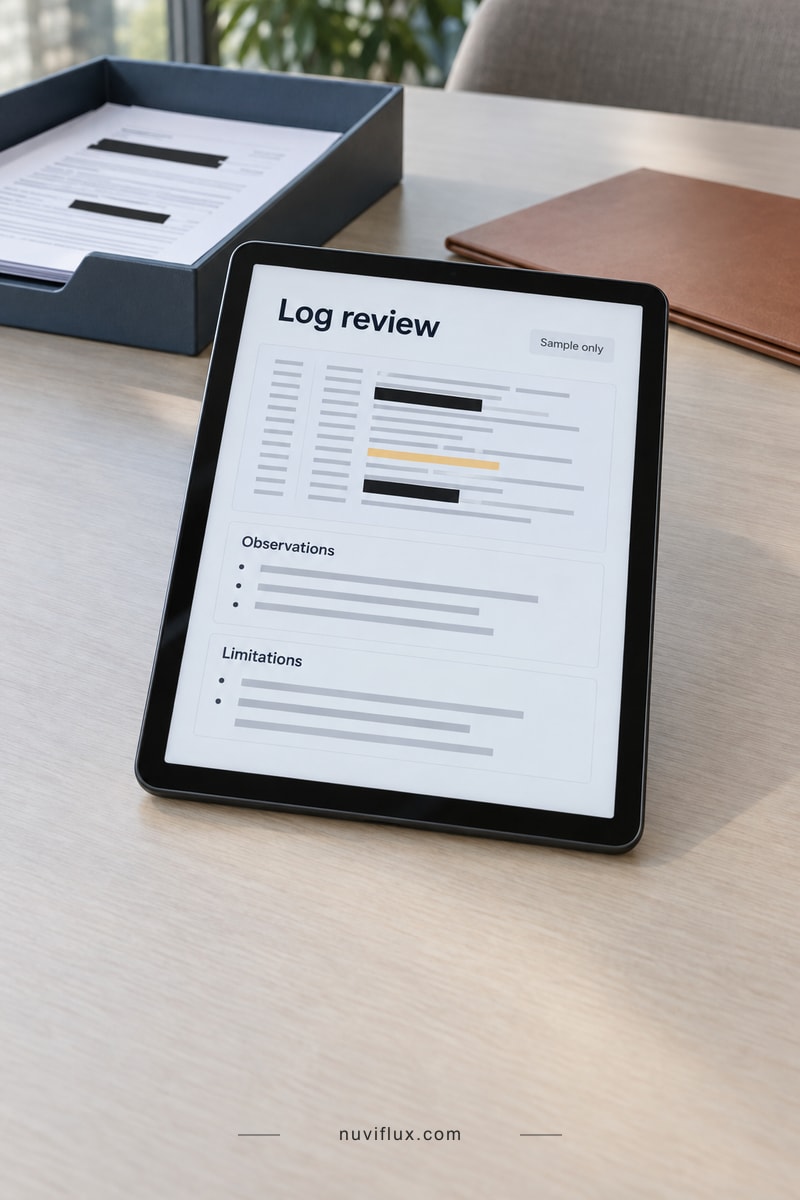
Audit AI apps for log-based prompt injection
Security consultants can audit AI applications for prompt injection risks hidden in log files.
Open NuviFlux for the evidence, open questions, and first test.

THE OPPORTUNITY, IN CONTEXT
Audit AI apps for log-based prompt injection
The business model
An assistant that reads application logs may encounter text it should treat as untrusted. A security specialist could review that risk in a limited consulting engagement, while making clear that a few log snippets cannot establish whether the whole app is safe.
What has been observed
The source describes a small red-team exercise in which untrusted text influenced one assistant’s output or proposed actions. It establishes a concrete case, not the prevalence of this risk or verified demand for paid log reviews.
Entry conditions and costs
Costs include specialist review time, workflow context, confidential data handling and follow-up. Static snippets cannot establish exploitability or certify an application as safe. Meaningful conclusions depend on what the assistant actually receives and does.
The key question
Would a team pay for a limited review that flags concerns without promising complete protection?
Common questions
Does suspicious log text prove a successful attack?
No. It may indicate an attempted instruction, quoted text or another ambiguous case. Successful compromise requires evidence of the relevant system behavior.
Can a static review replace a full AI security assessment?
No. It covers only the agreed sample and observations. It does not certify the model, tools, access controls or wider application.
A CLOSER LOOK
Review log risks in AI assistant workflows
Application logs can contain untrusted text that influences an AI assistant. A specialist could offer a limited review of that risk without claiming to certify the whole app.