Automate binary reverse engineering with AI agents
Security researchers can use AI agents to automate reading, renaming, and patching binaries within existing tools like Ghidra.
Open NuviFlux for the evidence, open questions, and first test.
THE OPPORTUNITY, IN CONTEXT
Making compiled software easier to understand
The business model
A team maintaining an older app may need to understand a compiled program when the source is missing or out of date. A reverse-engineering specialist could offer an analysis of what the software does, with notes the team can use for maintenance or migration.
What has been observed
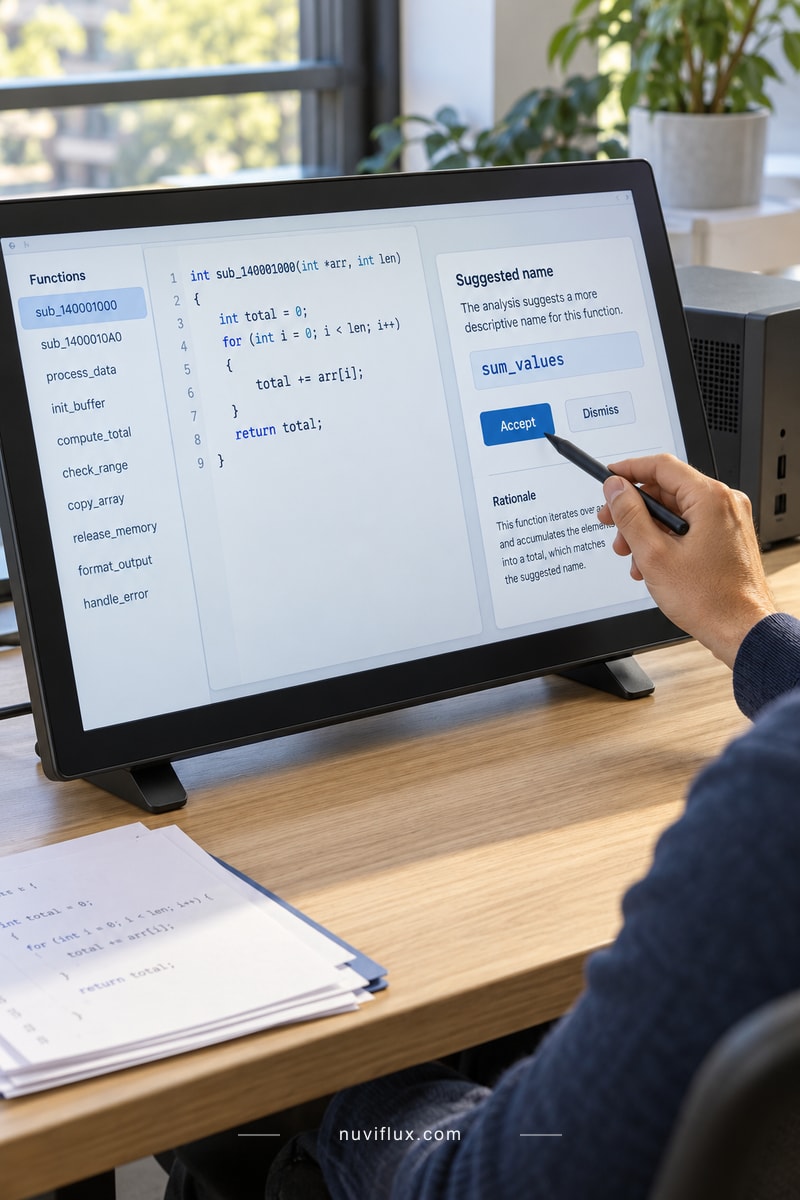
Eleven brings an AI agent and binary-analysis tools into one desktop app. Agents can suggest function names and add notes, while an analyst checks their explanations against the program.
Entry conditions and costs
The app is open source; the chosen agent may have its own access requirements and usage fees. Client permission and the model provider’s data rules matter when code leaves the machine. Incorrect labels can add review work, so faster suggestions do not always mean a faster job.
The key question
Would a team pay for a clear explanation of its software once the review work is factored in?
Common questions
Does Eleven run inside Ghidra?
It is a separate desktop app. One analysis route uses Ghidra through REA; the project also supports other engines.
Are suggested function names reliable enough to use as findings?
Treat them as working labels until their meaning has been checked against the code and available references. A convincing name can still be wrong.
A CLOSER LOOK
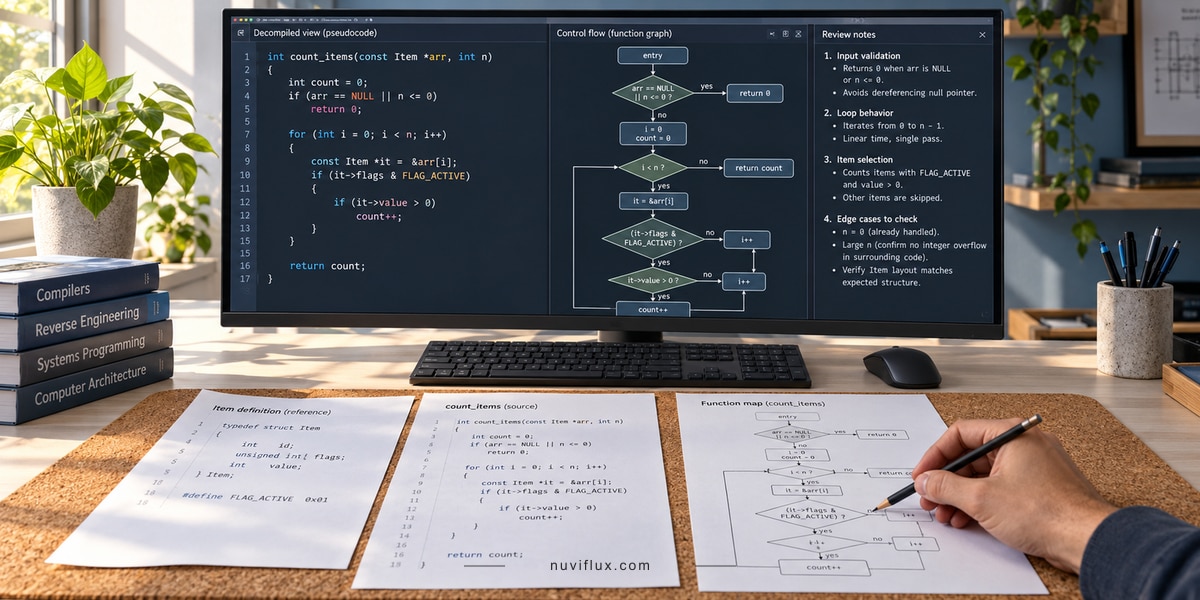
Human review for AI-assisted binary analysis
Teams maintaining software without source code may need help understanding it. A specialist could offer AI-assisted analysis and check the findings.