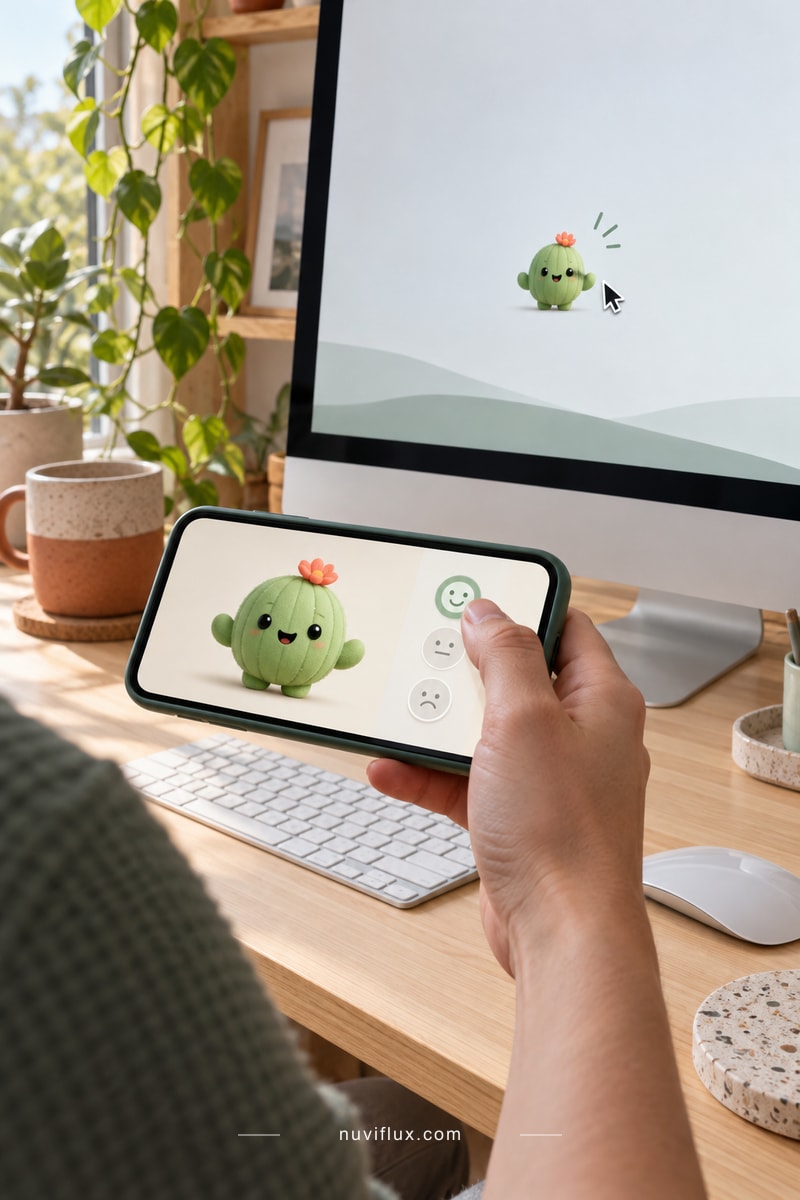
Build cross-device Mac-iOS character apps
Developers can build macOS menu bar apps that sync with companion iOS apps using Swift.
Open NuviFlux for the evidence, open questions, and first test.
THE OPPORTUNITY, IN CONTEXT
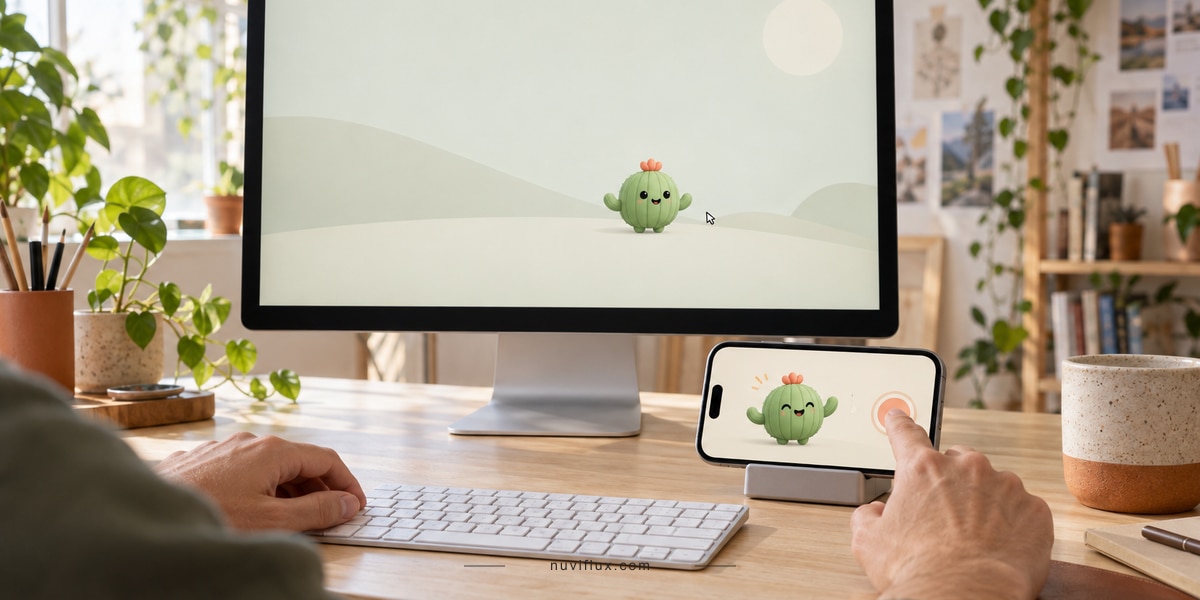
A character companion across two screens
The business model
A small character on a phone can make a desktop workspace feel more personal. Developers could build a paid companion app for Mac and iPhone users, pairing original character art with a useful interaction that spans both devices.
What has been observed
The Bluey reference project includes a Mac menu bar app and an iPhone app, with local device discovery and shared character state. It also includes cloud-based voice features. The code offers an architecture to study, rather than proof of demand or a finished commercial product.
Entry conditions and costs
Costs include Apple-device testing, character animation, connection handling, and ongoing support. Voice features can add API charges and privacy requirements. Permissions, secure pairing, background behavior, and store review can all affect how the product is designed and distributed.
The key question
What would make users keep this companion around after the novelty wears off?
Common questions
Is the reference app entirely local?
No. Device pairing is local, but the documented voice and transcription features use external APIs. A product's privacy claims must reflect the features it actually includes.
Does the sample establish App Store approval?
No. Building a reference app and meeting a chosen store's requirements are separate questions. The finished app needs its own testing and review.
A CLOSER LOOK
One character, two screens
A character on an iPhone can add a playful presence to a Mac workspace. Developers could build an original companion app around a useful interaction that carries across both screens.