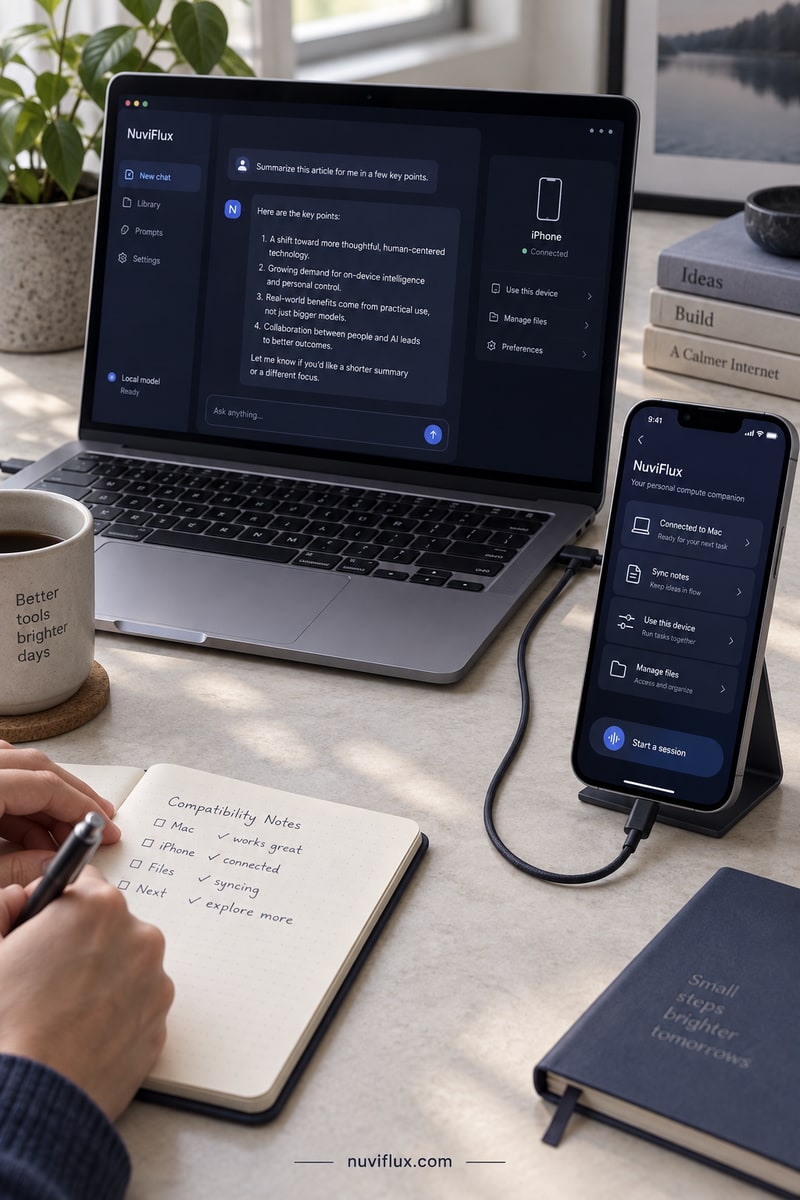
Bundle iPhone as GPU accelerator for local LLMs
Configure an iPhone to accelerate large language model inference on a Mac via USB-C.
Open NuviFlux for the evidence, open questions, and first test.
THE OPPORTUNITY, IN CONTEXT
iPhone-assisted local LLM configuration
The business model
Using an iPhone to share some local model processing is an intriguing option for owners of compatible devices. A configuration service could handle the app and connection setup, with no assumption that the phone will speed up every workload.
What has been observed
The reviewed backburner repository reports particular Mac and iPhone configurations, with phone contribution varying by workload and context. Its performance figures are author-reported, not reproduced here. The documentation does not establish universal device support, consistent acceleration or paid service demand.
Entry conditions and costs
Costs include setup time, model storage and application-signing maintenance. Memory permissions, cable bandwidth and keeping the phone application in the foreground can affect the experience. Any offer should identify supported equipment and avoid promising a speed improvement for every task.
The key question
Would users pay for setup when speed gains vary and maintenance may be needed?
Common questions
Will connecting an iPhone always make inference faster?
No. Contribution depends on hardware, workload, context and the software configuration.
Is this a one-time setup with no maintenance?
Not necessarily. Application signing, operating-system changes and connection constraints can require follow-up work.
A CLOSER LOOK
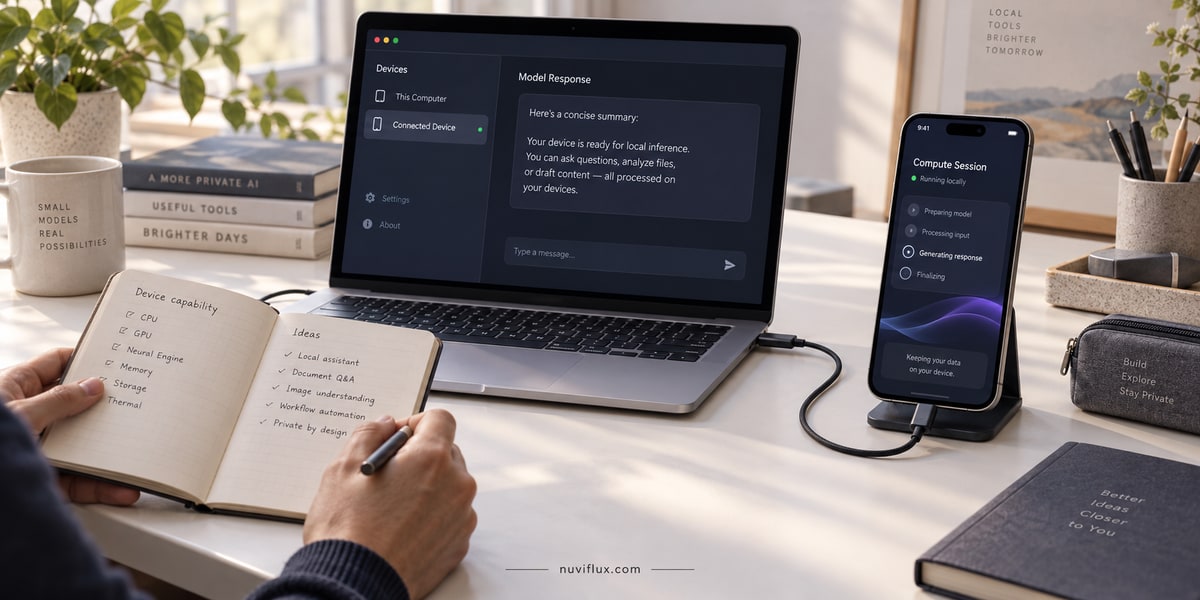
Two devices, variable contribution
A compatible iPhone can contribute compute to some local model workloads. A configuration service could help with setup while being clear that speed gains vary.