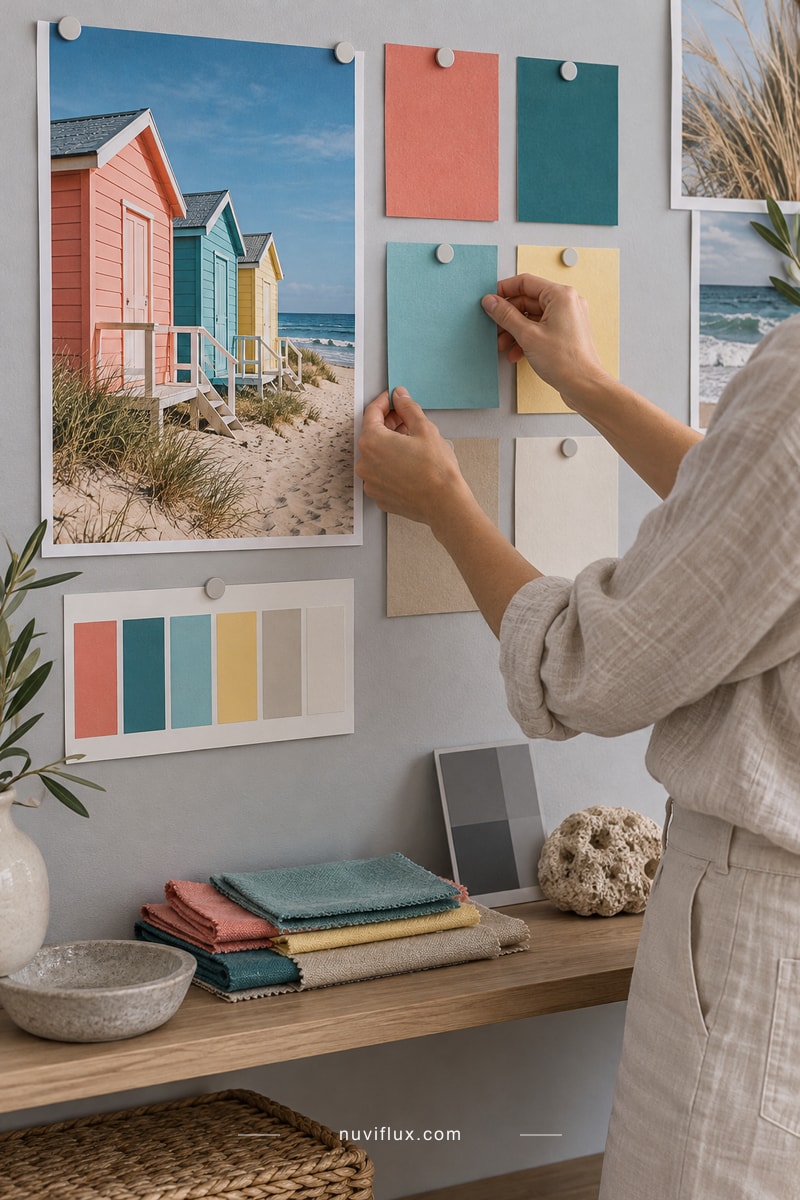
Extract named color palettes from images locally
Freelancers can use a new open-source tool to extract named color palettes from client images without cloud uploads.
Open NuviFlux for the evidence, open questions, and first test.

THE OPPORTUNITY, IN CONTEXT
Photo-based palettes with a designer's judgment
The business model
A reference photo can suggest a color direction without handing a designer a finished palette. A freelancer could turn it into a small set of reviewed swatches, descriptive names, and files suited to the client's design software.
What has been observed
The palette-from-image-ai repository describes local extraction and several export formats. Its README and Python package metadata differ on setup, and no GitHub release was available during this review. Offline operation and naming quality remain unverified.
Entry conditions and costs
The work involves color judgment, labeling, file preparation, and revisions. A name such as “sea glass” describes a color; it does not guarantee a match across screens or printed materials. Local processing could appeal to clients with private images, but that promise depends on the actual workflow.
The key question
Would clients pay for the designer's judgment and usable files when basic color extraction is available elsewhere?
Common questions
Are descriptive color names a professional color standard?
No. They help people discuss a palette. Reliable handoff also depends on numeric color values, the color space, and the intended use.
Has this tool's offline workflow been verified?
Not in this review. The repository claims local processing, but a runnable version and its network behavior still need confirmation.
A CLOSER LOOK
A palette shaped by design judgment
Designers often need a usable color palette from a reference photo. A freelancer could offer reviewed swatches and descriptive names through a local workflow that keeps client images off upload sites.