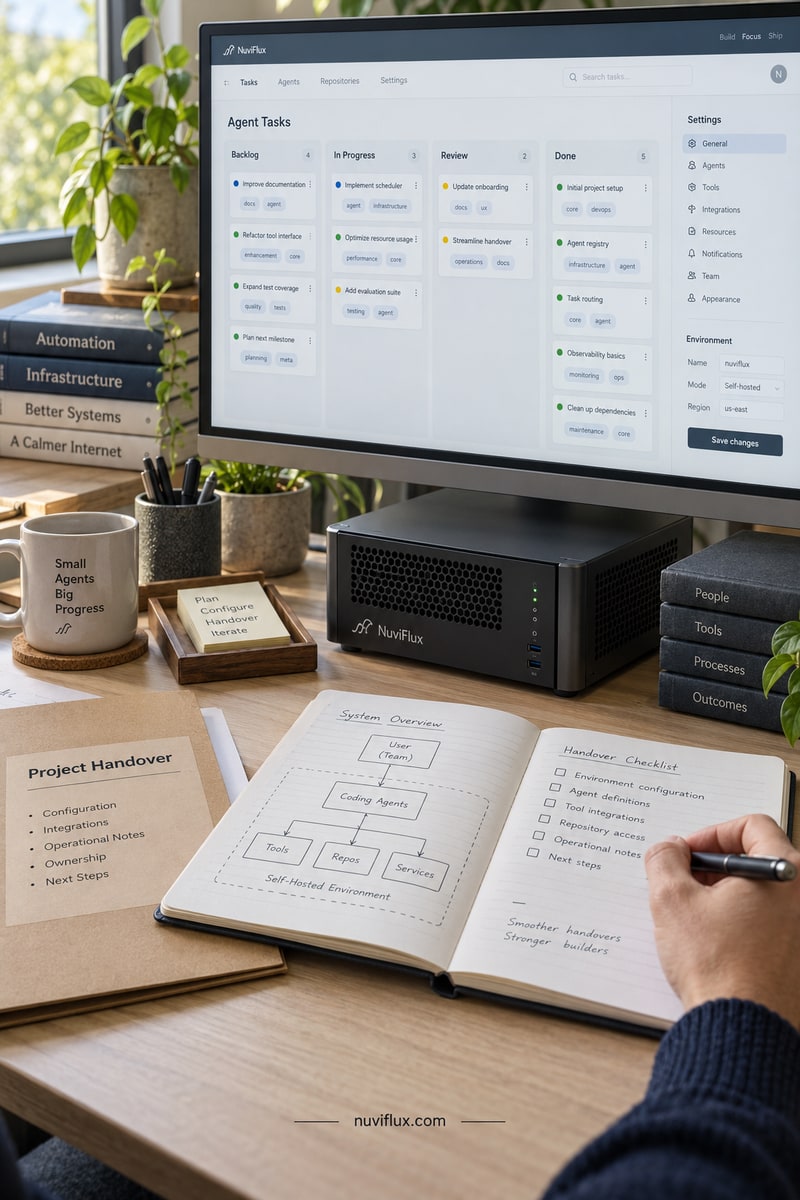
Install self-hosted AI agents for privacy-focused teams
Developers can install and configure open-source tools that let companies run AI agents on their own servers.
Open NuviFlux for the evidence, open questions, and first test.
THE OPPORTUNITY, IN CONTEXT
Self-hosted coding-agent setup and handover
The business model
Managing coding-agent sessions on a team’s own infrastructure gives the team more choices about access and operations. An implementation service could configure that environment and hand it over with clear responsibilities for accounts, hosting, and external providers.
What has been observed
The reviewed Valet repository describes a Compose-based coding-agent environment with provider subscriptions or API credentials. Self-hosted management does not establish local model inference. Repository activity indicates ongoing development, rather than an independent security assessment or verified demand for implementation services.
Entry conditions and costs
Costs include a suitable host, provider access, configuration work and maintenance. Container and host permissions, credentials and external data flows are important boundaries; the documented Docker-socket access carries high privileges. Configuration assistance cannot by itself guarantee privacy compliance or complete isolation.
The key question
Would a team pay for setup and handover with these access and external-provider limits?
Common questions
Does self-hosted mean the model runs locally?
No. The agent environment can be self-hosted while model requests go to external providers.
Is this a guaranteed compliant privacy solution?
No. Compliance depends on the team's requirements, permissions, provider terms and actual data handling.
A CLOSER LOOK
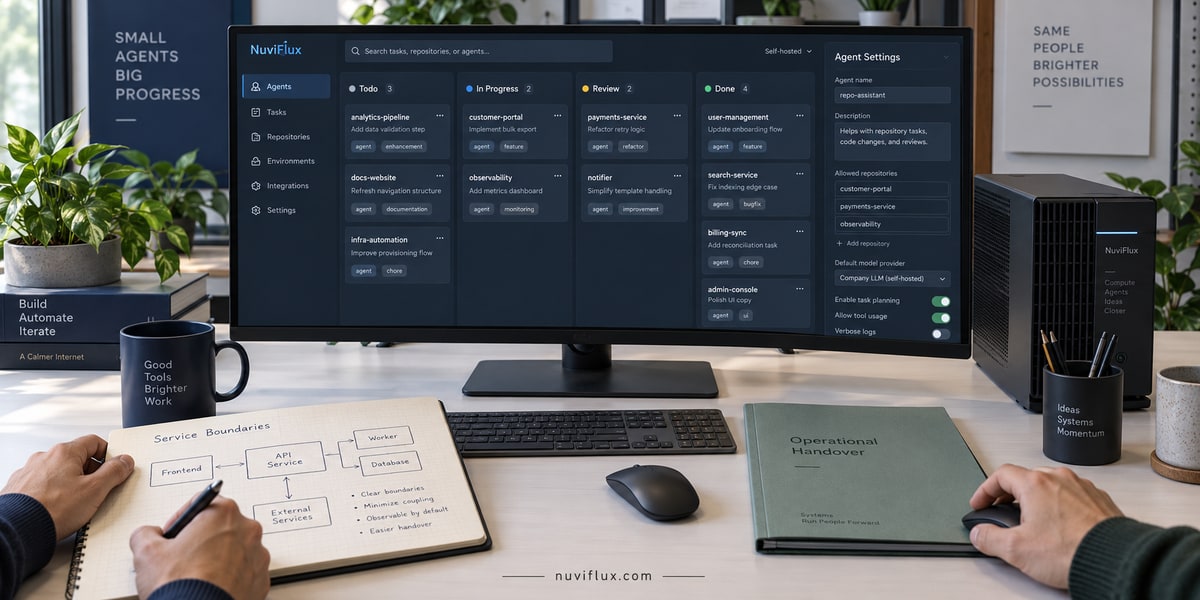
Control the workspace, understand the boundaries
Self-hosted infrastructure gives teams more control over coding-agent sessions. An implementation service could handle setup and handover while explaining external model and access limits.