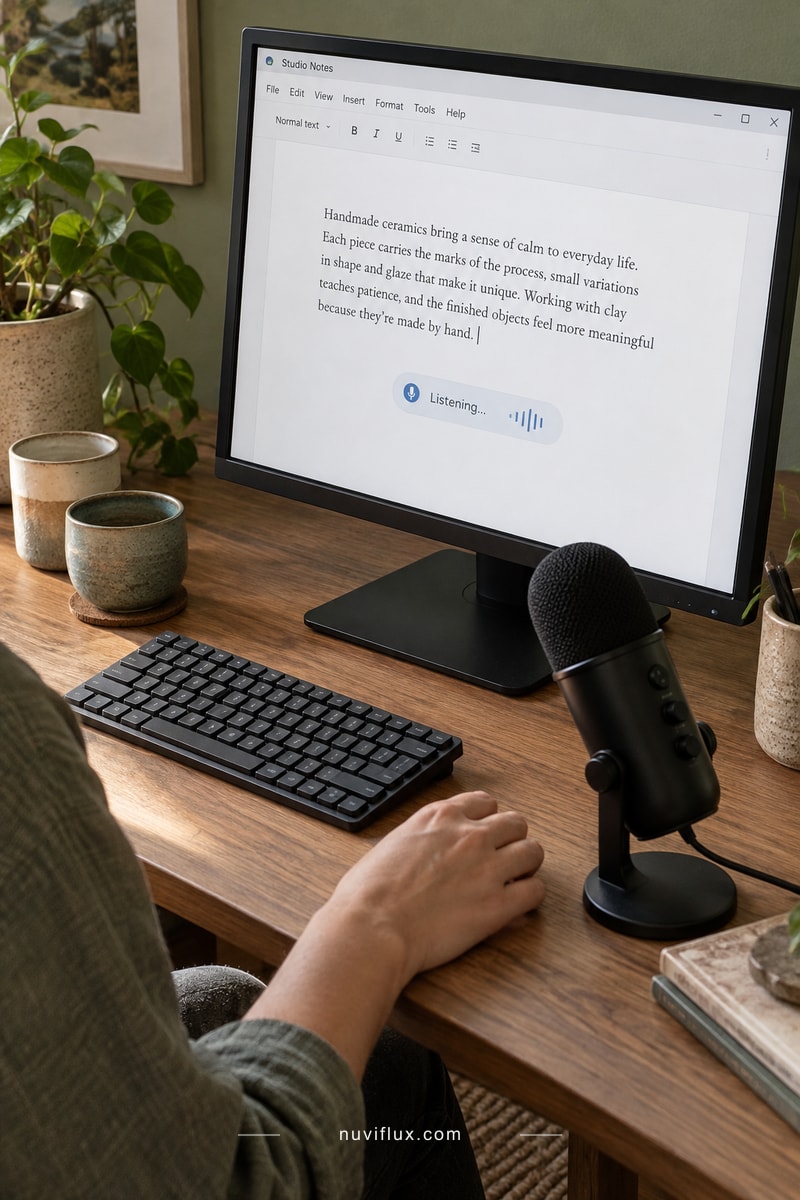
Integrate Ubuntu Myna for local speech-to-text
Developers can build privacy-focused transcription plugins using Ubuntu's new local speech-to-text engine.
Open NuviFlux for the evidence, open questions, and first test.
THE OPPORTUNITY, IN CONTEXT
Dictation for the desktop tools people already use
The business model
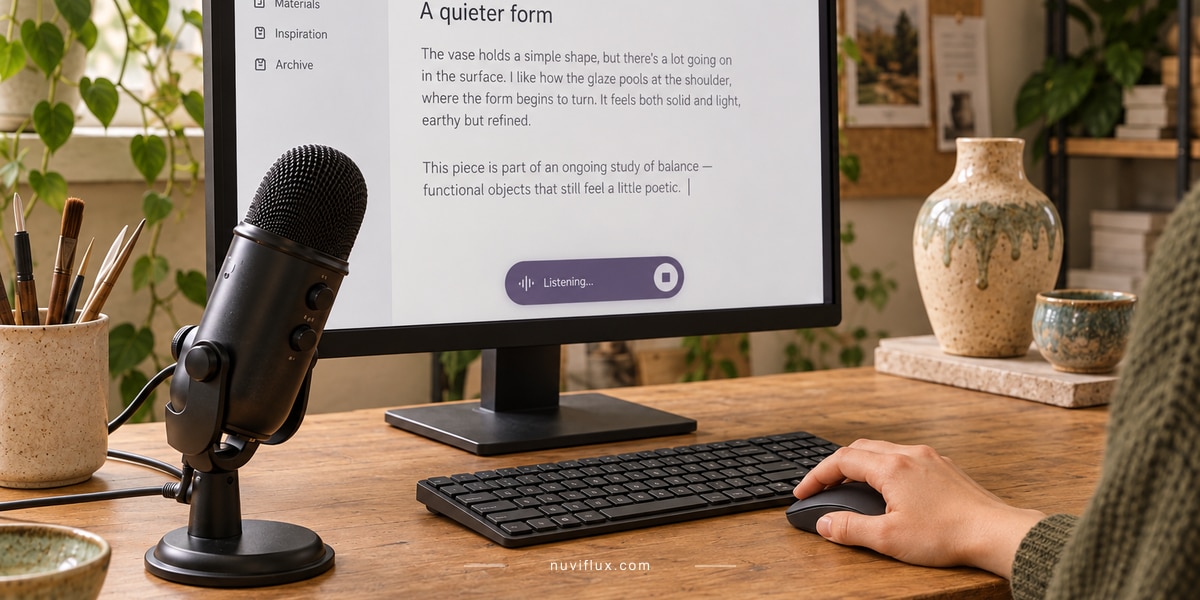
Local dictation lets Ubuntu users draft notes and messages without sending their speech to the cloud. A developer could build a paid integration for a specific job, such as dictating product descriptions into a desktop catalog app, with formatting tailored to that app.
What has been observed
Canonical's Myna preview brings local dictation to Ubuntu Desktop. It lets people dictate into the app they're using, with several speech recognition engines to choose from. The software is still in development, and its interfaces may change before a stable release.
Entry conditions and costs
Model downloads, memory use, recognition errors, and app compatibility all affect the work involved. Myna uses the AGPL-3.0-or-later license; commercial projects must meet its terms and account for the licenses of any models they include.
The key question
What would make someone pay for this integration when Myna already handles basic dictation?
Common questions
Is Myna a tool for transcribing recorded meetings?
Its main desktop feature is dictation into an app. The repository also includes a developer testbed for WAV clips, which is a separate workflow from the regular desktop experience.
Can a developer charge for an integration?
The AGPL allows charging, with conditions. Source-code obligations depend on how the software is modified, combined, and delivered. Models and dependencies can carry separate licenses.
A CLOSER LOOK
Voice input for a specific desktop task
Local dictation lets Ubuntu users draft text without sending speech to the cloud. A developer could build a paid integration for a specific app or writing task.