Build self-hosted digital goods storefronts
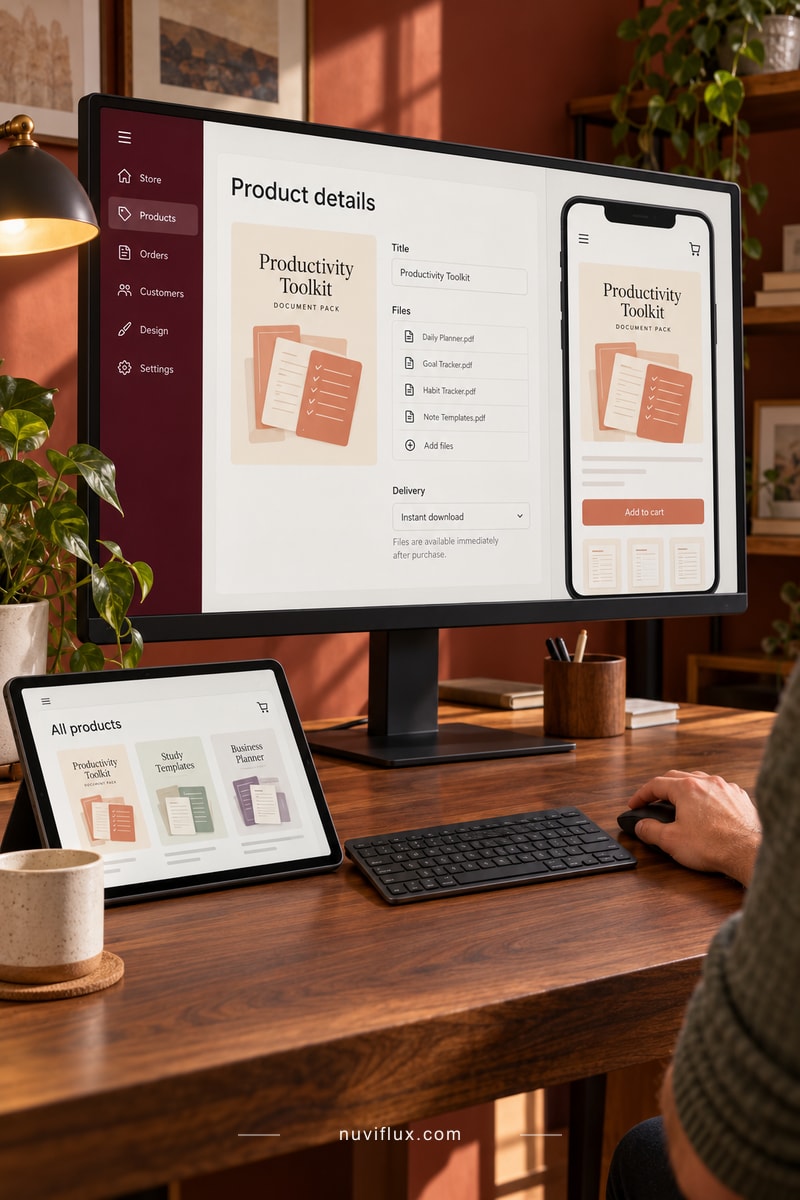
Some digital sellers want a store that fits their brand and gives them more control over how orders are handled. A developer could charge to customize, deploy, and maintain a self-hosted storefront for downloadable products.
Open NuviFlux for the evidence, open questions, and first test.
THE OPPORTUNITY, IN CONTEXT
A storefront built around the seller’s business
The business model
Some digital sellers want a store that fits their brand and gives them more control over how orders are handled. A developer could charge to customize, deploy, and maintain a self-hosted storefront for downloadable products.
What has been observed
GPTibo provides open-source storefront, admin, and partner-management code under the MIT license. It offers a starting point for the store, while payment and supplier services still need separate integration.
Entry conditions and costs
Hosting is only part of the cost. Payment processing, product delivery, updates, backups, and support also take work. The public release uses anonymized integration examples, so a working local preview is a long way from a store ready to take real orders.
The key question
Which sellers would pay for a custom store and the ongoing work of running it?
Common questions
Does the code include ready-to-use payment processing?
No. Real payment features are disabled by default, and the anonymized adapters need to be connected to the seller’s own services and tested.
What would clients be paying for?
Custom design and development, deployment, and ongoing support. The service is adapting the open-source storefront to the seller’s business and keeping it running.
A CLOSER LOOK
Custom stores for digital sellers
Some digital sellers need more control over their storefront and orders. Developers could offer custom store setup, deployment, and ongoing maintenance.