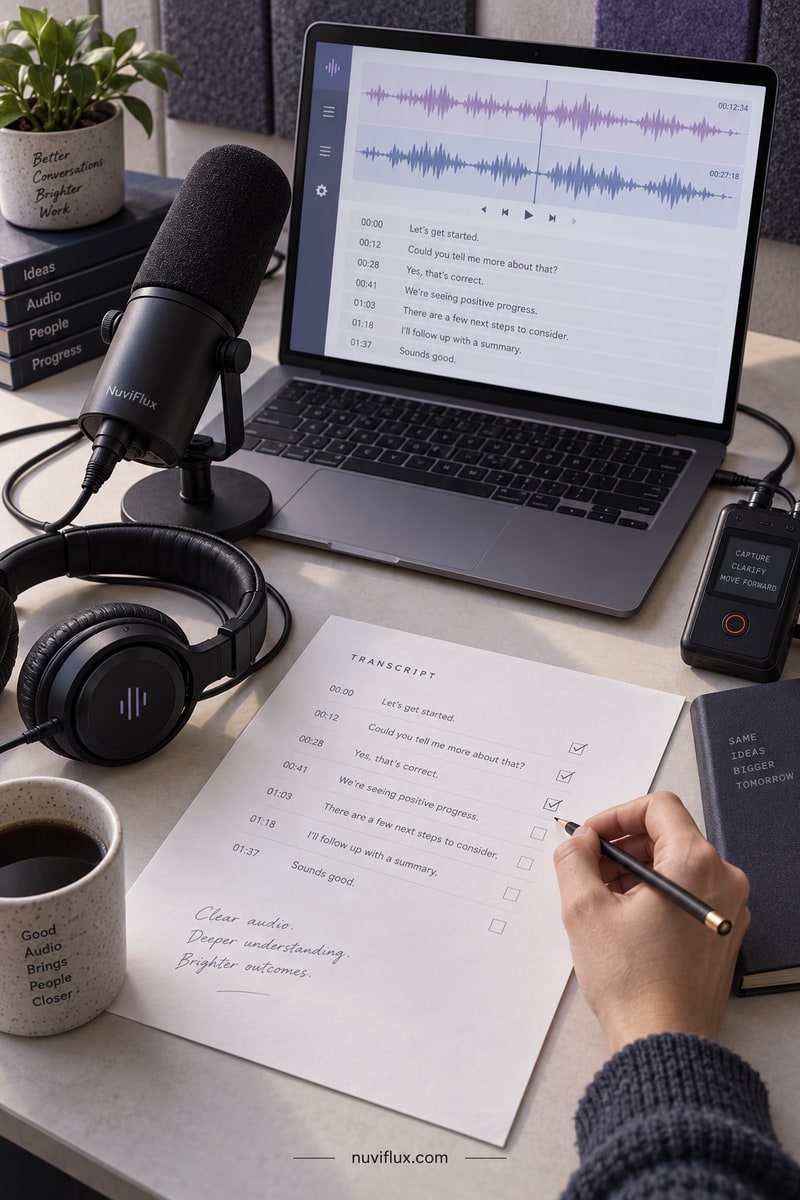
Offer local-first meeting transcription
Freelancers can use open-source tools to record and transcribe meetings locally for clients who require strict data privacy.
Open NuviFlux for the evidence, open questions, and first test.
THE OPPORTUNITY, IN CONTEXT
Explore a local-first meeting transcription service
The business model
A team that wants to keep meeting audio on its own equipment may need help with recording and transcription. The offer could be a local setup or a corrected transcript, with recording permission, storage, and any external processing spelled out.
What has been observed
The omarchy-meeting-recorder documentation targets a specific Linux desktop environment and describes local transcription and speaker inference. Optional chapter generation can send transcript text to a configured agent service. Local speech processing therefore does not mean every feature stays offline.
Entry conditions and costs
Costs include compatible hardware, installation, model downloads and correction time. Speaker labels can be wrong, especially with similar voices or rapid exchanges. Scope the handling of recording folders and recovery copies as well as the final transcript.
The key question
Will clients pay enough to cover setup, transcript correction, and careful data handling?
Common questions
Are chapters always generated locally?
No. Optional agent-based features can use external services; check their configuration separately.
Can speaker labels be delivered without review?
Treat them as a draft. Similar voices and fast exchanges can require manual correction.
A CLOSER LOOK
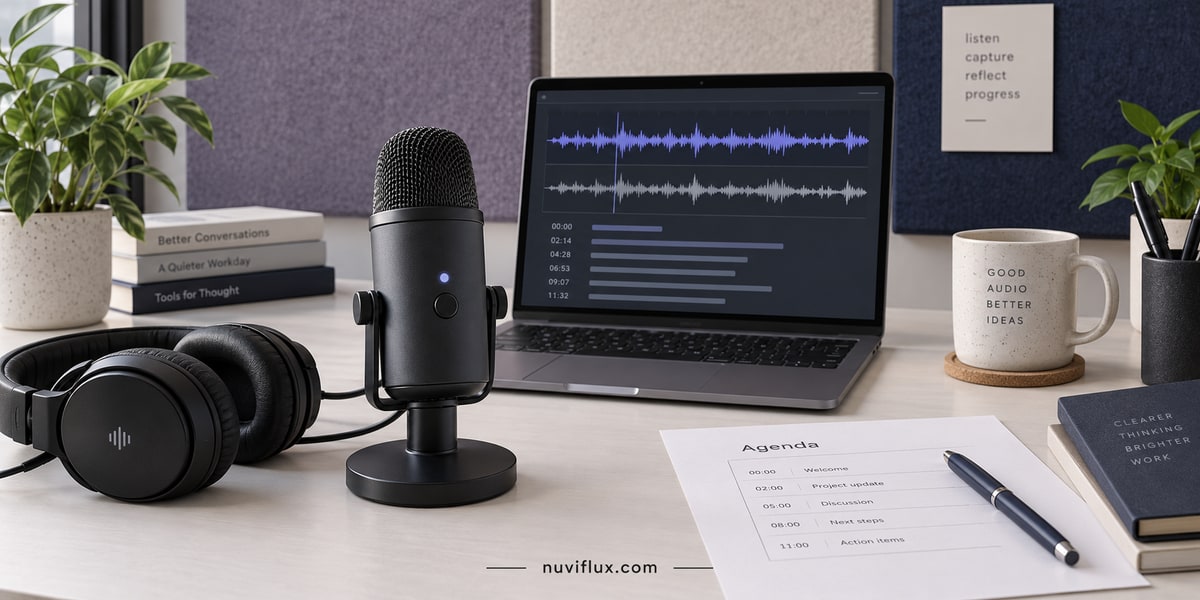
From two audio tracks to a reviewed transcript
Some teams want meeting audio processed on their own equipment. A service could provide local recording setup or corrected transcripts, with external features clearly disclosed.