Optimize live streams using WHIP protocol
Streamers can reduce bandwidth usage by configuring OBS to use the WHIP protocol for video transmission.
Open NuviFlux for the evidence, open questions, and first test.
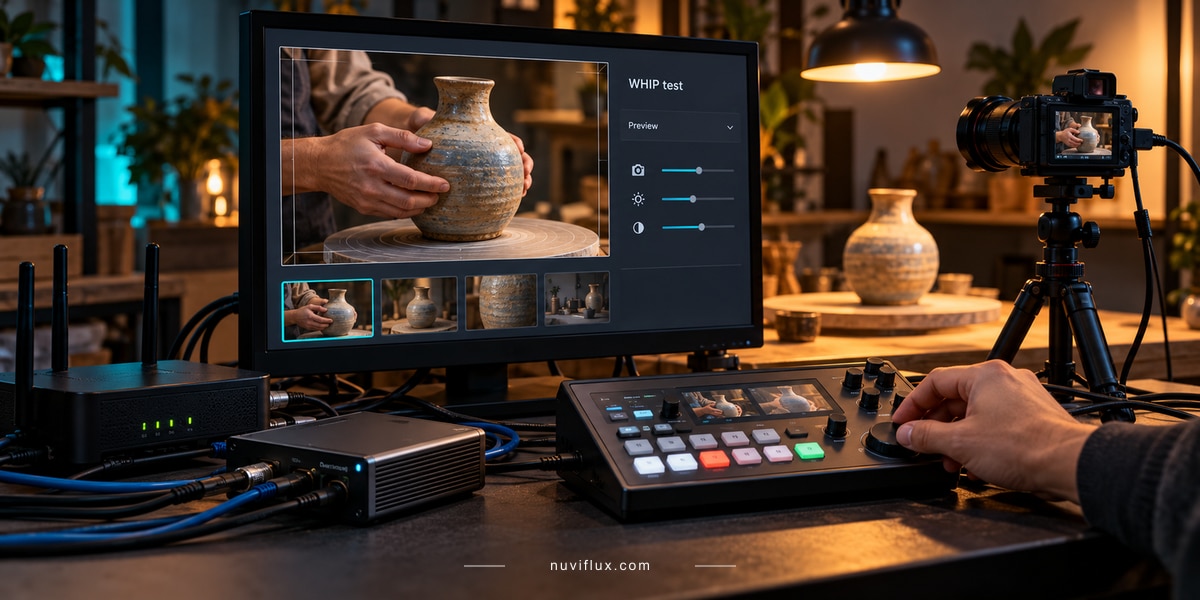
THE OPPORTUNITY, IN CONTEXT
Streaming setup for live interaction
The business model
Live workshops and small events need a stream that keeps up with the conversation. WHIP lets compatible encoders send video over WebRTC. A consultant could help hosts choose a supported setup and assess the viewing experience.
What has been observed
Pion explored bitrate savings from changing how often video keyframes are sent. That is a conditional result, not a saving every WHIP stream gets. Cloudflare Stream and Amazon IVS document WHIP ingest, while the OBS change discussed in the article is still under review.
Entry conditions and costs
The paid work is in making the whole setup fit the event: encoder compatibility, audio and video sync, viewer access, and a fallback if the connection fails. Hosting, delivery, testing, and support all affect the cost. A change that helps live interaction may also limit recording or playback options.
The key question
Would a workshop host pay for a tested streaming setup that makes live audience interaction easier?
Common questions
Will WHIP automatically cut bandwidth by 15%?
No. The article ties that possibility to encoding choices and receiver feedback. The encoder, receiving service, and content all affect the result.
Can this setup work with any streaming platform?
The receiving service needs a compatible WHIP endpoint. Recording, replay, and delivery to other platforms are separate features that vary by provider.
A CLOSER LOOK
A streaming setup built around the event
Interactive workshops need video that keeps up with the conversation. A streaming consultant could help hosts evaluate WHIP on compatible platforms and build a setup around their event.